
In the world of mycology, the study of spores opens up a fascinating window into the herbal world. Among the gear used by researchers and hobbyists alike, the spore syringe stands proud as one of the most handy and important. For those with a ardour for analyzing spores under a microscope, this device offers a smooth, attainable manner to take a look at the earliest stages of mushroom life. When paired with a fascinating specimen like the Stargazer mushroom, spore syringes emerge as now not simply equipment, but gateways into a universe too small to be visible with the naked eye.
Stargazer mushrooms are specifically exciting for his or her particular characteristics and visual attraction. Their spores offer a threat to explore the mysteries of fungal biology in a controlled and specific manner. But to fully respect their cost in microscopic research, it’s vital to understand how spore syringes work, how they are used, and why the Stargazer range holds such fascination for the mycological community.
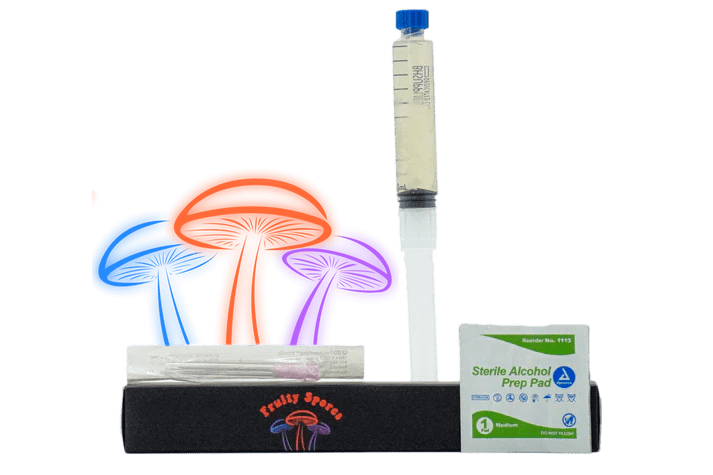
The Role of Spore Syringes in Mycological Study
Spore syringes are designed for the purpose of storing and delivering spores suspended in a sterile liquid solution, often water. This suspension allows for smooth software onto a slide, wherein the spores can be observed in element under a microscope. In scientific settings, this method eliminates the inconsistencies and infection risks that regularly accompany dry spore collection. It additionally permits a greater uniform distribution, making observations and documentation more dependable.
The sterile surroundings of a spore syringe are key to its usefulness. Because spores are extraordinarily small and delicate, they are susceptible to infection by microorganisms or mildew, which could compromise the integrity of any studies. Syringes defend the spores from external factors and provide a means of particular placement on microscope slides, Petri dishes, or other substrates used in laboratory and academic settings.
This approach is especially beneficial while studying rare or precise mushroom varieties, which include the Stargazer. When spores are suspended in liquid, their structures become easier to isolate, stain, and analyze at varying magnifications. This level of management is what makes the spore syringe an invaluable resource for each novice and expert microscopist.
What Makes Stargazer Mushroom Spores Special
The Stargazer mushroom, with its evocative call and exquisite appearance, is known for generating spores that captivate researchers. Its spores are regularly described as having rich pigmentation and described shapes, making them less difficult to look at and photograph under magnification. These traits make the Stargazer range a fave for those who report spore prints or interact in visual taxonomy.
Under the microscope, the spores showcase fascinating textures and styles, revealing spiny or smooth surfaces relying on age and environmental conditions. For mycologists, those trends help in class and identification. Each tiny spore holds a world of information — from its reproductive viability to the way it interacts with environmental elements like humidity and temperature.
Stargazer spores also have a tendency to stay viable for extended durations while stored well, a trait that adds to their enchantment. Whether refrigerated or saved at room temperature in a dark space, these spores preserve their integrity, which is good for long-term projects or academic demonstrations over time.
Preparing and Using a Spore Syringe for Stargazer Research
Handling a spore syringe calls for attention to cleanliness and method. To start, microscopists normally work in sterile surroundings, such as a glove field or under a laminar glide hood, to save you airborne contaminants from affecting the sample. A slide is prepared regularly with a drop of sterile water or staining solution, after which a small quantity of spore solution from the syringe is introduced.
Once on the slide, the spores can be included with a cowl slip and lightly pressed to distribute them evenly. Depending on the intention of the statement, researchers may additionally choose to examine the spores in their natural shape or follow various stains to highlight cellular systems. Either way, Stargazer spores lend themselves properly to both easy and advanced microscopic techniques.
Because of their strong spore walls and hanging color, Stargazer spores frequently respond vividly to commonplace organic stains. This permits clearer differentiation of cell systems and reproductive capabilities, aiding in a deeper understanding of their form and function. Even at decreased magnifications, those spores can offer particular insights into the complexity of fungal reproduction and development.
Challenges in Spore Microscopy and How Syringes Help
One of the constant challenges in spore microscopy is accomplishing a smooth, uncontaminated pattern that is representative of the species being studied. Traditional strategies like spore prints or swabs can every now and then, introduce particles or other fungal species, main to inconclusive consequences. The spore syringe approach minimizes these problems by offering a pre-suspended, filtered solution that is generally sterile and equipped to be used.
In the case of Stargazer mushrooms, the capacity to have a look at pure spores in a managed putting is essential. Their particular spore capabilities are first-class studied whilst isolated, unfastened from substrate particles or different natural factors that could interfere with readability. Spore syringes offer that clarity, allowing microscopists to focus merely on the structures at hand.
Additionally, the syringe format allows for long-term storage without degradation, something that isn’t always possible with dried spore prints. This longevity opens the door for repeat observations, comparisons across time, or maybe collaborative research wherein the identical pattern can be shared and reviewed in one-of-a-kind labs or instructional establishments.
Scientific and Educational Value of Stargazer Spore Syringes
The mixture of a spore syringe and a species as visually and structurally exceptional as the Stargazer creates possibilities for learning and discovery. Educational programs that educate on microscopy frequently start with not unusual spores, which might be easy to work with and interpret. Stargazer spores, because of their aesthetic and structural qualities, serve as incredible coaching specimens. They inspire curiosity and offer a visually profitable experience for students and beginner researchers.
Beyond the lecture room, these spores have led to more severe scientific investigations. For instance, reading the manner Stargazer spores react to environmental modifications can offer insight into broader fungal ecology questions. How they adapt to moisture levels, mild exposure, or distinctive pH stages can all be found at the microscopic stage, giving a more detailed image of fungal survival techniques.
Even in citizen science projects, where non-specialists make a contribution to statistics in large clinical endeavors, spore syringes allow for consistency and accuracy. Stargazer spores, because of their sturdiness and area of expertise, are notable applicants for such contributions, supporting the mapping of fungal biodiversity or revealing environmental changes over the years.
The Future of Spore Syringe Technology and Research
As clinical equipment evolves, the spore syringe remains a dependable staple in the mycological toolkit. Advances in syringe design, filtration techniques, and storage solutions continue to enhance the consumer experience, making it even less complicated for researchers to get access to terrific spore samples. For Stargazer mushrooms, which are gaining popularity in research circles, this indicates more opportunities for certain exploration and knowledge.
One emerging area of hobby is the potential for automatic imaging and AI-assisted evaluation of spore samples. When paired with well-prepared slides from spore syringes, this technology could revolutionize how mycologists catalog and examine fungi. The specified structures of Stargazer spores, while processed via high-decision imaging software program, might in the future make a contribution to large-scale databases or maybe predictive fashions of fungal conduct.
With sustainability also turning into a imperative subject matter in science, the ability to shop, proportion, and examine spores without overharvesting wild mushrooms is an increasingly vital. Spore syringes provide a way to keep genetic material and preserve research without impacting natural ecosystems. Stargazer mushrooms, widespread for his or her unique capabilities, benefit from this technique, making sure that future generations can have a look at them without depleting their natural populations.
Conclusion
Understanding the function of spore syringes in mycology gives a deeper appreciation for the subtle splendor and complexity of mushroom spores. When these gears are paired with the lovely and one-of-a-kind spores of Stargazer mushrooms, they unencumber a world this is both scientifically rich and visually charming. From instructional use to critical scientific studies, spore syringes provide a easy, efficient, and constant manner to explore the microcosmic landscape of fungi. In regions known for their diverse fungal life, such as the India Orissa mushroom varieties, the use of spore syringes becomes an even more fascinating avenue for exploration and preservation. Stargazer mushrooms, with their compelling traits and resilient spores, are greater than simply charming specimens — they’re ambassadors of the fungal kingdom. Through the lens of a microscope and the precision of a spore syringe, they display styles, secrets, and wonders that remind us how an awful lot there nevertheless is to find out about the natural international. As mycology keeps to grow in scope and sophistication, gear just like the spore syringe will stay crucial, guiding each amateur fanatics and pro researchers towards new horizons of discovery.







 Idea Sprout News
Leave a comment