
When you set up a rifle for serious use, things get real pretty fast. It’s not about looking cool on Instagram. It’s about what works when your heart rate is up and your hands aren’t steady. That’s where ar red dot sights come into the conversation. Not as a trend. As a practical choice.
If you’re building an AR for home defense but still want to stretch it out at the range on weekends, the optic matters. A lot more than people think. Some setups feel fine under calm conditions and fall apart when the pressure kicks in. Others just work. No drama.
Let’s talk through it like normal people.
Why AR Red Dot Sights Make Sense for Home Defense
Home defense is close. Tight hallways. Low light. Weird angles. You’re not laying prone at 300 yards. You’re moving. Probably fast.
This is exactly where ar red dot sights shine.
With a quality red dot mounted properly, you’re running both eyes open. Target acquisition is fast. There’s no lining up a rear sight and front post. You put the dot where it needs to be and press. That simplicity isn’t marketing hype. It’s mechanical advantage.
Another big thing is eye relief. Traditional magnified optics demand a specific head position. Red dots don’t care much about that. You can be slightly off center and still make hits. In a defensive situation, that forgiveness matters more than people want to admit.
Battery life used to be a weakness. Not anymore. Many modern red dots stay on for years. Literally. You set it, leave it, check it occasionally. Done. If you’re trusting something for defense inside your home, reliability matters more than fancy features.
But What About the Range?
Here’s where some people get stuck.
They assume red dots are only for short distance work. That’s not really true. It depends on how you define “range.”
Inside 100 yards? A good red dot is almost boringly effective. Steel at 50? Easy. Controlled groups at 75? No problem. The dot size matters, though. A smaller MOA dot lets you be more precise. A larger dot is faster up close but can cover more of the target at distance.
Stretch it to 200 yards and beyond, and things change a little. You can still hit consistently, especially with a solid zero and good fundamentals. But you’ll work harder for tight groups compared to magnified glass.
That’s the tradeoff. Speed versus precision. Simplicity versus versatility.
Some shooters split the difference and pair their red dot with a magnifier. That’s not a bad middle ground. Flip it into place when you want more detail downrange. Flip it out when you want speed. It adds weight, sure. Everything does.
Durability Isn’t a Bonus — It’s Mandatory
If we’re comparing the best options, we have to talk about durability.
Home defense optics need to survive bumps. Maybe getting knocked against a door frame. Maybe dropped. Maybe stored for long periods without attention. A weak housing or loose mounting system isn’t acceptable.
Look for solid construction. Aluminum housings. Secure mounting platforms. Simple adjustments that don’t drift after a few hundred rounds. Windage and elevation turrets should feel firm. Not mushy.
Weather resistance is another thing people overlook. Humidity. Rain. Temperature shifts. Even indoors, environments change. A good red dot handles it quietly in the background.
The best ones don’t advertise toughness. They just are.
Window Size and Field of View
This is one of those things that seems minor until you actually run the rifle.
A larger viewing window feels more forgiving. Faster. It gives you better situational awareness, especially in close quarters. For home defense, that bigger window can be helpful when you’re scanning and moving.
Smaller micro-style dots are lighter and more compact. Less bulk on the rail. Some shooters prefer that minimal footprint, especially for lightweight builds. But the tradeoff is slightly tighter visual space.
Neither is automatically better. It depends on how you train and what feels natural when you shoulder the rifle. If the dot is hard to find when you mount the gun quickly, something’s off.
Brightness and Low-Light Performance
Inside a house at night, lighting is rarely ideal.
Your optic needs adjustable brightness settings that actually work. Too bright and the dot blooms. Too dim and you’re hunting for it. Auto-adjust features can be nice, but manual control gives you consistency.
For range use in full sun, brightness becomes even more critical. A washed-out dot under bright daylight is frustrating. Good ar red dot sights handle both extremes without drama.
This is where some of the cheaper options start showing cracks. Flickering reticles. Weak illumination. Inconsistent settings. Fine for casual plinking maybe, not for defensive use.
Optics for Guns: Understanding the Bigger Picture
Let’s zoom out for a minute.
When people start researching optics for guns, they often jump straight into magnification debates. LPVO versus red dot. Prism versus holographic. It turns into a gear war fast.
But context matters.
If your primary concern is defending your home and training regularly at typical carbine distances, a red dot is still one of the most efficient tools you can mount. Less complexity. Fewer failure points. Faster under stress.
Magnified optics absolutely have their place. If you’re pushing distance consistently, shooting small targets, or running competitions that demand precision at 300 yards and beyond, then sure, magnification earns its keep.
But for most people? Realistically? The majority of defensive rifle work happens inside 100 yards. Often inside 25.
The best optics for guns are the ones that fit the mission. Not the ones trending on forums.
Reticle Simplicity Versus Fancy Designs
Some red dots stay simple. Just a clean dot. Others add rings, multiple reticle options, or switchable patterns.
For home defense, simple wins more often than not. A crisp dot is easy to process. Under stress, your brain appreciates clarity.
At the range, additional reticle elements can help with holds or faster transitions between targets. But complexity can also slow you down if you’re not fully familiar with it.
Personally? I lean toward simple. Less thinking. More shooting.
Mount Height and Co-Witness Considerations
This part gets technical, but it matters.
Mount height affects how naturally the rifle comes to your eye. Absolute co-witness, lower one-third, higher mounts — they all change your head position slightly.
For defensive setups, many shooters prefer a height that allows a comfortable, upright posture. Less scrunching your neck down. Faster alignment.
Co-witness with backup iron sights is still debated. Some swear by it. Others remove irons completely and trust the dot. There’s no single right answer. Just understand what your setup gives you before you need it.
Training solves more problems than gear anyway.
Weight and Balance on the Rifle
It’s easy to ignore a few extra ounces on paper.
On the gun, it adds up.
Compact red dots keep the rifle light and balanced. Add a magnifier, a heavier mount, maybe a flashlight, and suddenly you’re holding something noticeably front-heavy.
For home defense, maneuverability matters. For range days, fatigue creeps in during longer sessions.
The best setups feel neutral. Like an extension of your shoulder, not a brick hanging off the rail.
So, Which Type Works Best for Both?
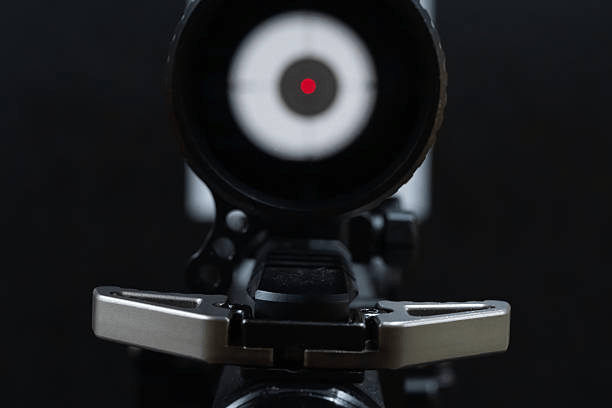
If we strip away hype and just focus on reality, the sweet spot for a dual-purpose rifle is a durable, medium-sized red dot with adjustable brightness, solid battery life, and a clean reticle.
Not flashy. Not overloaded with features.
Zero it properly. Confirm your holds at different distances. Train transitions. Shoot from awkward positions. That’s where confidence comes from.
AR red dot sights that balance durability, clarity, and simplicity usually win this comparison. They won’t match long range rifle scopes at extended distances — and they’re not meant to. Long-range rifle scopes excel when precision at distance is the mission. Red dots dominate inside practical distances while staying usable out to moderate ranges.
And that’s a realistic envelope for most shooters.
Final Thoughts on Choosing the Right Setup
At the end of the day, gear is personal.
You can read comparisons all day, scroll through endless opinions, and still feel stuck. I’ve been there. The truth is, the “best” optic is the one that matches your real-world use and that you actually train with.
For home defense combined with regular range time, ar red dot sights remain hard to beat. Fast. Durable. Simple. They remove unnecessary friction from the shooting process. When adrenaline kicks in, simplicity wins.


 Idea Sprout News
Leave a comment