
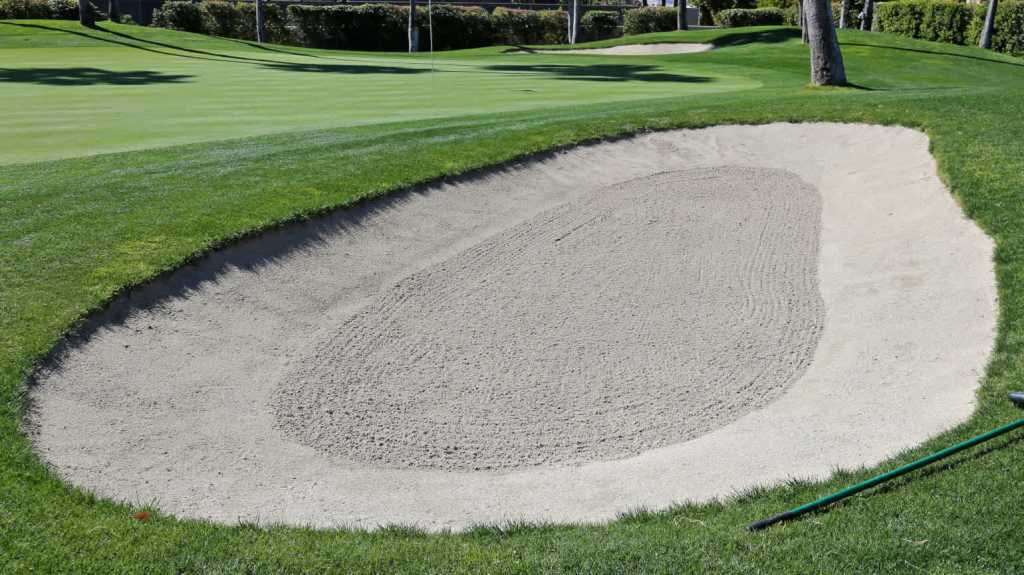
If you have ever stepped into a bunker and felt that sinking, powdery mess under your feet… or the opposite, a rock-hard surface that feels like hitting off concrete… you already know how tricky bunker sand selection can be. And honestly, we have seen golf course crews go back and forth trying to figure out the right mix. That is why the USGA (United States Golf Association) put together specific recommendations to help courses choose sand that plays well, drains well, and stays consistent season after season.
Let us walk through these guidelines in a friendly, no-nonsense way… just like we would if we were standing next to the bunker together, coffee in hand.
Why So Much Attention on Bunker Sand?
We all think of bunkers as hazards, but players still expect them to be fair. Over the last decade, USGA agronomists noticed that poor sand selection was one of the biggest reasons for maintenance headaches… like bad lies, crusting, contamination, and drainage problems.
There was even a USGA-supported study that found more than 60% of bunker performance issues come from incorrect sand particle size or shape, not bunker design. Surprising, right?
So choosing the right sand is not a tiny detail. It affects playability, budgets, and even golfer satisfaction.
1. Particle Size: The Heart of USGA’s Recommendations
The USGA has tested thousands of sands across the country, and their data shows that the ideal particle size range is between 0.25 mm and 1.0 mm. Sands outside this sweet spot tend to behave unpredictably.
Here is why this range matters:
- Too fine, and the bunker compacts easily… players complain their wedges bounce off the surface instead of cutting through.
- Too coarse, and shots come out too hot, flying way past the green. Also, it hurts drainage because water slips through too fast and causes erosion.
The USGA recommends a minimum of 75% of the sand fall within the medium-to-coarse range, based on sieve tests. Many golf course labs can run this test, and trust us… it saves trouble later.
2. Particle Shape: How Angular Is Too Angular?
6
Sand shape seems tiny, but wow, it changes everything. The USGA suggests choosing sub-angular or sub-rounded particles, not perfectly round or very sharp.
- Very angular grains lock together too tightly, making bunkers firm and crusty after rain.
- Very rounded grains roll around like marbles, leading to fried-egg lies and inconsistent footing.
A 2018 USGA Green Section study showed that sub-angular grains give the most stable and predictable ball reaction, especially in high-play environments.
When you think of it, it makes sense. We need sand that settles nicely but still lets the club slide through smoothly.
3. Drainage: The Unsung Hero of Good Bunkers
Nobody wants a bunker that turns into a bathtub after a storm. The USGA recommends choosing sand that keeps infiltration rates between 20 and 100 inches per hour. Crazy wide range, we know, but it covers different climates and bunker depths.
Why it matters:
- Sand that drains too slowly stays wet and compacts…
- Sand that drains too fast washes out and exposes liners…
One superintendent once told us, “We thought our drainage system was bad. Turned out, our sand was the real problem.” We have heard similar stories more times than we can count.
4. Purity and Color: Not Just About Looks
Bright white bunkers look beautiful, but the USGA reminds courses to check mineral content.
Sand with high silt, clay, or limestone can crust or break down quickly. They recommend:
- Less than 3% silt and clay
- Non-carbonate sand if possible, so it does not dissolve during rain or irrigation
This keeps bunkers consistent over the long haul. It also means fewer “mystery crust” days where crews end up scratching their heads.
5. Firmness Matters… More Than Most People Think
The USGA uses a device called a Penetrometer to measure firmness in inches. Ideal firmness is somewhere in the middle… not so soft that balls plug, and not so firm that they bounce and release too much.
A study found players prefer firmer sand than most superintendents realize, which is interesting if you have ever watched golfers complain about fluffiness. The right firmness often comes from the right moisture, grading, and particle shape, not adding more sand.
6. Long-Term Consistency and Local Supply
For the sake of your budget (and sanity), the USGA encourages courses to pick a sand that is locally available and consistent. A lot of headaches happen when a supplier changes its quarry source. Suddenly the “same” sand is not the same anymore.
Choosing materials that help maintain consistency and reduce contamination goes a long way toward keeping bunkers uniform across the entire course.
Final Thoughts: Choosing the Right Sand Makes Life Easier
If there is one thing we tell course managers all the time, it is this: picking the right bunker sand upfront is cheaper, easier, and far less frustrating than trying to fix the wrong sand later. The USGA recommendations are not just theories… they come from decades of testing, lab work, and real-course feedback.
And when you break it all down, these guidelines exist for one simple reason: to keep bunkers playable, predictable, and fair for everyone who steps into them.
If you want, we can also help you create a version tailored for a specific golf course or region. Just say the word!






 Idea Sprout News
Leave a comment