
Alright… let us be real for a second.
We start planning something simple… maybe a driveway, a patio, or even just a small path in the backyard. Everything feels easy at first. Then suddenly… we hit that question.
How much base do we actually need?
Yeah… that one.
And honestly, it is not a silly question at all. Because if we use too much, it feels like wasted money. But if we go too thin… ugh, we already know how that ends. Cracks, uneven spots, that annoying sinking feeling when you walk or drive over it.
That is where class 2 road base comes in. It is not the exciting part of the project… but it is the part that quietly decides if everything lasts or falls apart.
So let us just talk through it like we normally would.
Why We Should Not Ignore the Base (Even Though We Want To)
We all care about how things look on top.
Nice pavers, smooth concrete, clean finish… that is what we show people, right?
But the truth is… the base underneath is doing all the real work.
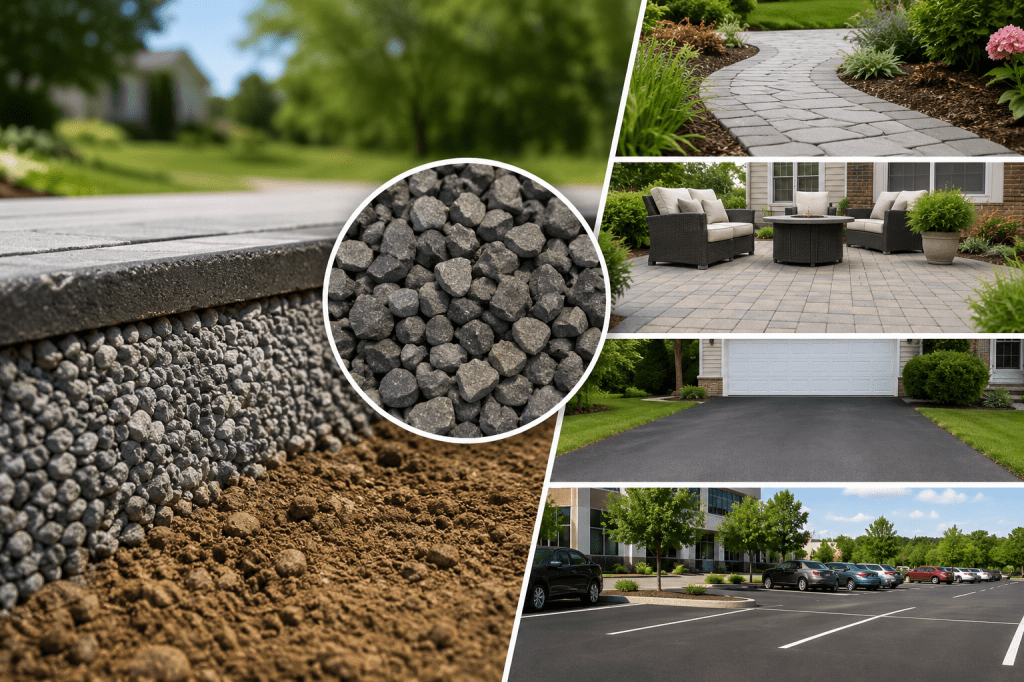
It holds everything up. It spreads the weight. It deals with water. It keeps things from shifting around when the ground decides to move a little.
Kind of like… the backstage crew at a show. No one sees them, but without them, everything collapses.
Walkways and Garden Paths… Keeping It Simple
Let us start with the easy one.
If we are just making a walkway or a garden path, we are mostly dealing with foot traffic. Nothing too heavy.
So here, we usually keep it around 3 to 4 inches of compacted base.
That is enough. No need to overdo it.
But… quick reality check.
If we do not compact it properly, even 6 inches will not help. And if we compact it well, even 3 inches can perform nicely.
Strange, but true.
Patios… Where Things Get a Bit Busy
Now patios… they look chill, but they carry more weight than we think.
Chairs, tables, maybe a barbecue setup… and then a few people standing around. It adds up.
So we usually go a bit thicker here… around 4 to 6 inches.
It gives that extra support so things do not start shifting later.
Because let us be honest… wobbly pavers are one of those small things that become very annoying, very quickly.
Driveways… Yeah, This One Matters
Now we step into serious territory.
Driveways deal with cars. And cars are not exactly light.
Even a normal car puts a lot of pressure on the same spots every single day.
So here, we are usually looking at 6 to 8 inches of compacted base.
And if we know heavier vehicles will be using it… going a bit thicker is not a bad idea.
Sometimes we think, “maybe this is too much”… but a few years later, when everything still looks solid, we get it.
Parking Areas and Bigger Spaces
Now imagine a parking area… or something a bit more commercial.
More vehicles. More movement. More stress on the surface.
So naturally, the base needs to be stronger.
This is where it usually goes 8 to 12 inches or even more.
Yeah… it sounds like a lot. But when you think about the load, it makes sense.
The Soil Underneath… The Sneaky Factor
Here is the part we often forget.
The ground below everything.
Two projects can look exactly the same on the surface… but if the soil underneath is different, the results will be different too.
If the soil is soft or loose, we need to add more base.
Simple logic.
Skipping this part might feel fine at first… but later? That is when problems show up. And fixing them is never cheap.
So… What Should We Actually Do?
Honestly, there is no perfect one answer.
It depends on what we are building.
It depends on the ground.
It depends on how much weight it will handle.
But one thing is always true…
A strong, well-compacted base makes everything better.
So whether it is a small path or a full driveway, giving proper attention to the class 2 road base is always worth it.
Less stress later. Fewer repairs. And we get to enjoy the space without constantly worrying about it.
Sounds like a good deal, right?
FAQs
1. What is Class 2 road base used for?
It is used as a base layer for things like driveways, patios, roads, walkways, and parking areas to keep everything stable.
2. Can we use Class 2 road base under pavers?
Yes, we can. It is actually one of the most common choices because it gives solid support underneath.
3. How thick should Class 2 road base be for a driveway?
Most driveways work well with around 6 to 8 inches, but heavier vehicles may need a bit more.
4. Does Class 2 road base need to be compacted?
Yes, it does. Compaction is what gives it strength and helps prevent sinking or shifting later.
5. Can soft soil affect the required road base thickness?
Yes, definitely. Softer soil usually means we need a thicker base to keep everything stable.






Leave a comment